

Modern manufacturing has entered a new era—an era defined by smart factories, connected machinery, data-driven automation, and real-time decision-making powered by intelligent software. As production lines grow more connected, the importance of industrial cybersecurity has never been greater. Manufacturers today rely on CNC machines, IoT sensors, industrial robots, and cloud-integrated systems to streamline operations and maximize efficiency. But with these advancements also comes a heightened exposure to digital risk.
Cyber adversaries are adapting quickly, and manufacturing has become one of the most targeted sectors in the world. State-sponsored attackers, criminal organizations, and opportunistic hackers see immense value in disrupting production lines, stealing intellectual property, or compromising sensitive operational data. The consequences are not only financial—they can threaten worker safety, product quality, and business continuity.
A modern industrial environment can only thrive if it is protected. For manufacturers investing in CNC automation, IoT connectivity, and smart factory initiatives, building strong digital defenses is no longer optional—it must be foundational.
Why Cybersecurity Matters More Than Ever in Industry 4.0
The shift from traditional manufacturing to fully connected ecosystems has escalated security demands at every layer of production. Each new device connected to a network becomes a potential entry point for attackers. CNC machines, for example, once operated in isolation; today, they integrate with scheduling software, ERP systems, and cloud analytics tools. The same is true for smart sensors and IoT devices that support predictive maintenance, automation, and workflow monitoring.
This hyper-connected landscape requires a more holistic and proactive approach to protection. Manufacturers can no longer rely on outdated firewalls or isolated security measures. Threat actors now use advanced techniques such as ransomware infiltration, supply-chain manipulation, and credential compromise to infiltrate critical systems. By strengthening system-wide defenses, businesses can prevent production downtime, protect employee safety, and safeguard sensitive designs and proprietary technology.
Top Risks Facing Modern Manufacturing
A modern factory floor contains thousands of data points and interconnected systems. Any one of these can become a vulnerability without proper oversight. Among the most common risks are:
- Outdated operating systems running CNC or robotic equipment.
- Legacy machinery lacking encryption or modern authentication.
- IoT devices shipped with default credentials or minimal protection.
- Weak segmentation that allows attackers to move laterally across networks.
- Human error, including phishing responses or poor password habits.
- Remote access tools that aren’t properly secured.
When attackers successfully penetrate industrial networks, they often exploit these systemic weaknesses to deploy cyber threats designed to halt production or steal critical data. Once inside, they may also escalate their access using privilege-abuse techniques or inject malicious code directly into CNC instruction sets—potentially altering measurements, tolerances, or programming in ways that compromise product quality.
The Growing Danger of Targeted Attacks
As manufacturers incorporate AI-driven machinery, cloud-based monitoring, and advanced robotics, the potential impact of a digital breach becomes more severe. Modern adversaries are no longer interested in randomly probing networks—they conduct focused, strategic campaigns to gain long-term access. These intrusions, commonly categorized as industrial cyber attacks, often include:
- Ransomware designed to shut down entire production lines.
- Manipulation of sensor readings or machine parameters to degrade output.
- Theft of CAD files, CNC programs, or proprietary process information.
- Disruption of robotics systems or automated workflows.
- Breaching OT (Operational Technology) systems to trigger physical damage.
Any of these attacks can disrupt not only manufacturing operations but also supply chains, client relationships, regulatory compliance, and product reliability. Protecting industrial control systems requires safeguards that go far beyond what traditional IT security measures provide.
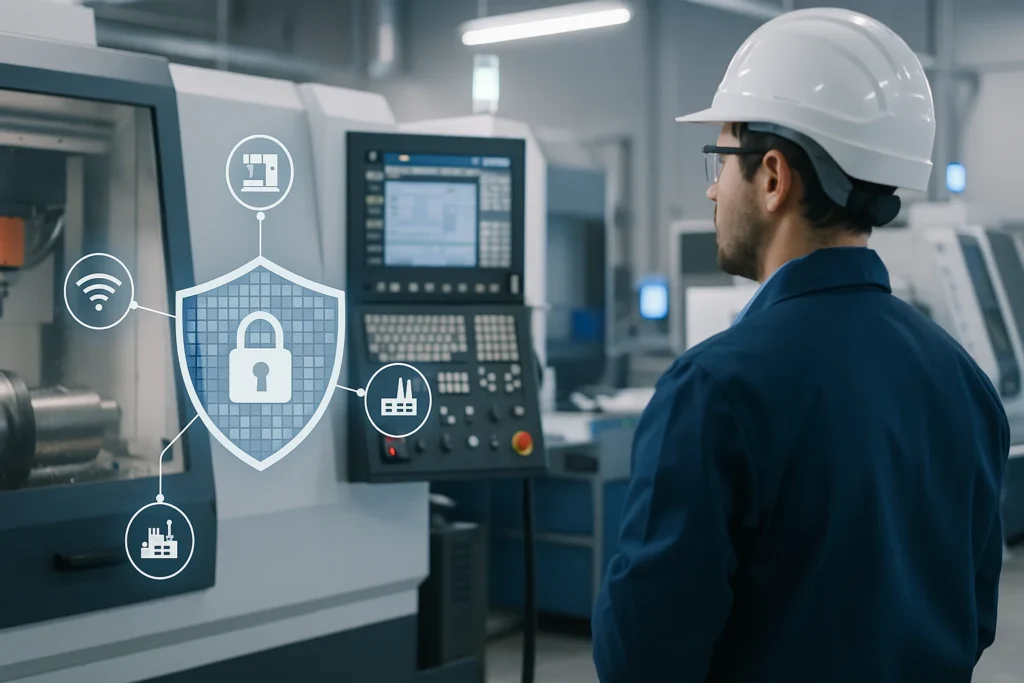
Key Components of a Modern Industrial Cybersecurity Strategy
To fully protect CNC machines, IoT networks, and smart factory infrastructures, manufacturers must adopt a comprehensive strategy tailored to their operational environment. Essential pillars include:
1. Network Segmentation
Separating IT and OT environments limits how far attackers can move once inside. Robust segmentation prevents a breach in one area from expanding into critical systems.
2. Zero-Trust Access Controls
Every user, device, or application must verify identity continually. This prevents unauthorized or malicious actors from gaining broad access rights.
3. Real-Time Monitoring and Threat Detection
Continuous monitoring of machine behavior, network activity, and sensor data allows teams to identify anomalies in real time—before they escalate into major incidents.
4. Secure Remote Access and VPN Controls
Many factories rely on remote technicians or cloud-based equipment updates. These connections must be encrypted, authenticated, and monitored to prevent unauthorized intrusion.
5. Device Hardening
Changing default passwords, applying firmware patches, and disabling unused features are critical steps to securing IoT and CNC equipment.
6. Regular Software and Firmware Updates
Unpatched systems are one of the most common attack vectors. Routine updates reduce vulnerabilities before they can be exploited.
7. Employee Training
Human error remains a leading cause of breaches. Training programs focused on phishing awareness, password hygiene, and operational best practices dramatically reduce risk.
Building Resilient Smart Factories for the Future
The manufacturing sector stands at the crossroads of innovation and risk. As factories continue embracing automation, IoT integration, and cloud-enabled intelligence, their exposure to digital threats grows proportionally. A comprehensive approach to protection ensures not only operational uptime but also product integrity, employee safety, and long-term competitiveness.
Conclusion
To thrive in an environment defined by innovation, manufacturers must safeguard their digital and physical systems with equal urgency. Protecting CNC machines, IoT networks, and smart factory processes requires a proactive, layered approach rooted in modern security principles. With the right strategy and commitment to resilience, organizations can embrace the full potential of connected manufacturing while ensuring the continuity and reliability that their teams and customers depend on.