
Let’s talk about something that rarely gets attention in industrial projects. Not the machines. Not the materials. Not the scale of the operation. But the tiny connection points that hold everything together.
In large manufacturing environments, entire systems depend on the strength of welded joints. Conveyor frames, heavy machinery supports, industrial platforms, structural assemblies — they all rely on something deceptively simple: precision welding.
Most people don’t think about welds unless something goes wrong. But experienced engineers, fabricators, and manufacturers know the truth.
The difference between a structure that lasts decades and one that develops problems early often comes down to how those welds were made. And that’s where things get interesting.
The Small Detail That Carries Big Responsibility
In industrial fabrication, welded joints are not just connections. They are load transfer points. They absorb vibration. They distribute stress. They support weight. They resist fatigue.
A poorly executed weld can compromise an entire assembly. A well-executed one quietly does its job for years without anyone noticing.
That’s why advanced industrial welding techniques have become such a critical part of modern fabrication environments. They allow manufacturers to produce strong, consistent joints across complex metal assemblies while maintaining efficiency and repeatability.
And when those techniques are combined with experienced craftsmanship, the results are structures that perform reliably under demanding conditions.
Why Weld Quality Matters More Than People Think
If you walk through an industrial facility, you’ll see steel everywhere. Frameworks. Platforms. Equipment housings. Structural supports. But what really determines whether those components perform reliably over time is the structural welding quality behind them.
Because metal structures rarely fail in the middle of a beam. They fail at connection points. That’s where stress accumulates. That’s where fatigue begins.
And that’s why weld integrity plays such a crucial role in long-term durability.
When welding quality is high, structures handle:
• Continuous vibration
• Heavy loads
• Thermal expansion
• Mechanical stress
• Long operational cycles
Without consistent weld quality, even the strongest materials can underperform.
Precision Isn’t Just a Skill — It’s a Process
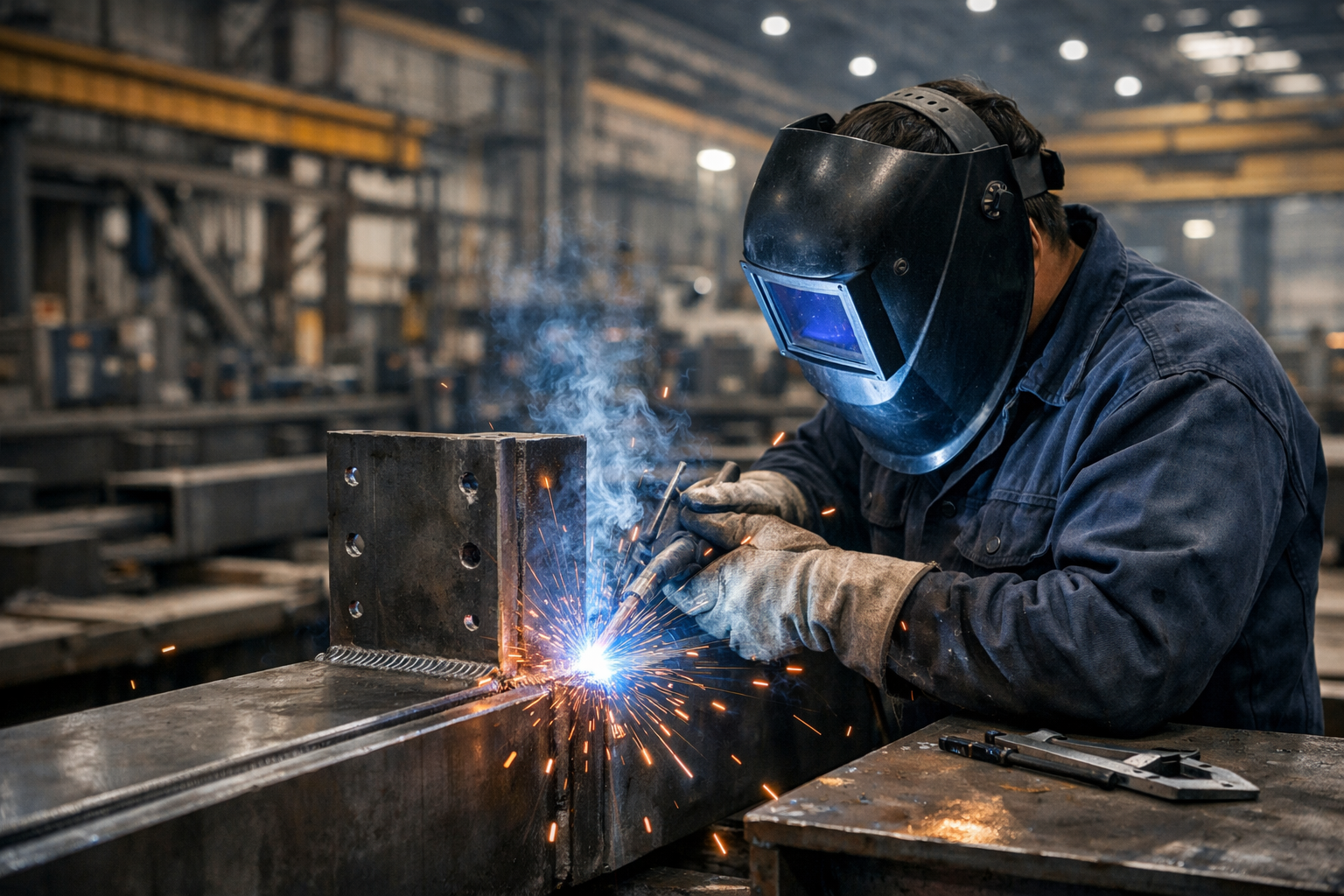
When people hear the word welding, they sometimes imagine a torch and sparks. But modern fabrication environments are far more sophisticated.
Achieving welding accuracy in metal fabrication involves careful control of multiple variables:
- Heat input
- Joint preparation
- Material thickness
- Welding speed
- Penetration depth
- Distortion control
Each of these factors influences how metal behaves during the welding process. Too much heat can warp components. Too little penetration can weaken the joint. Improper alignment can create hidden stress points. Precision welding is about managing all of these factors simultaneously so the final structure performs exactly as engineered. It’s both technical science and skilled craftsmanship.
The Human Expertise Behind Every Strong Weld
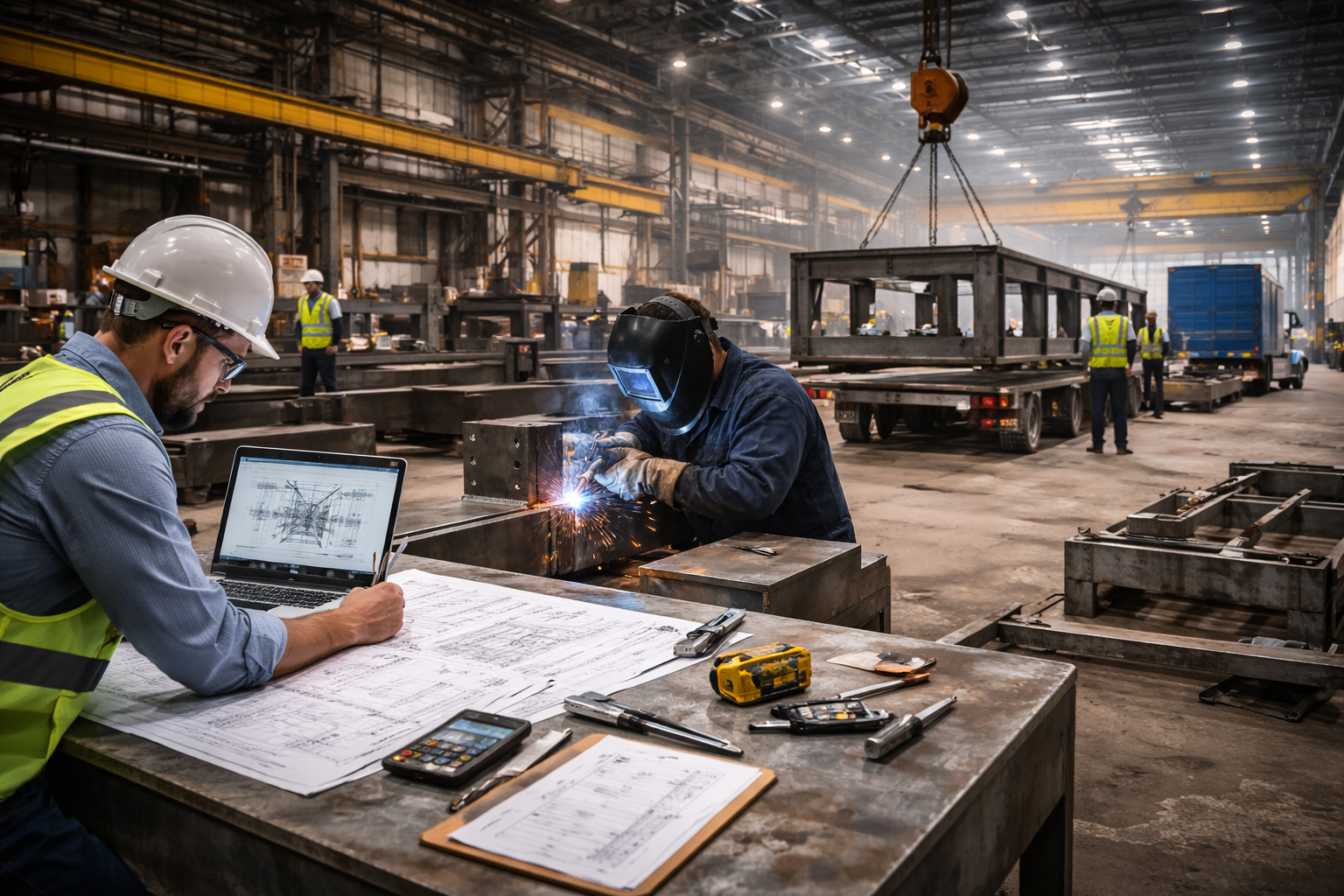
Even with modern equipment and automated tools, welding still depends heavily on human expertise. Fabricators who perform certified industrial welding go through extensive training and qualification processes to ensure they can handle demanding industrial applications.
Certification demonstrates proficiency in areas like:
- Material compatibility
- Joint design
- Welding position
- Heat management
- Inspection requirements
- Safety procedures
These professionals don’t just follow instructions. They understand how metal behaves during fabrication and how to adjust techniques to maintain consistency across large projects. And that expertise directly translates into stronger, more reliable industrial components.
Standards Exist for a Reason
Industrial environments leave little room for guesswork. Facilities must operate safely, consistently, and predictably. That’s why welding standards for industrial projects exist.
These standards define:
- Acceptable welding procedures
- Material preparation requirements
- Inspection protocols
- Quality verification methods
- Safety practices
Following established standards ensures that welds meet strict performance expectations and remain reliable over long operational lifespans.
Without these frameworks, fabrication quality could vary dramatically between projects.
Standards create consistency — and consistency builds trust.
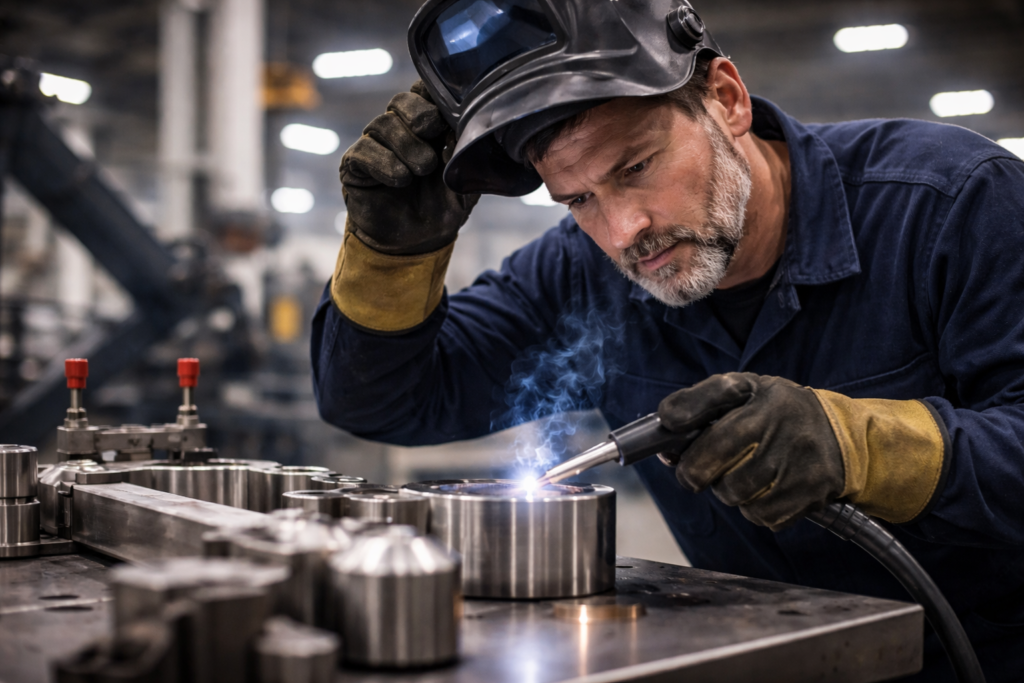
Why Manufacturers Care About Welding More Than Ever
Manufacturing today looks very different than it did twenty years ago. Facilities are larger. Machines are heavier. Production cycles run longer. Automation is more complex.
All of that means structural components experience more stress than ever before. When a facility runs around the clock, even minor weaknesses can turn into costly problems over time. That’s why manufacturers increasingly focus on fabrication precision.
Not just in design. Not just in machining. But also in welding. Because weld quality directly impacts equipment stability, operational safety, and maintenance frequency.
And when operations depend on reliability, every detail matters.
What Strong Welding Actually Prevents
High-quality welding doesn’t just build structures. It prevents problems.
Reliable welds help reduce risks like:
• Structural fatigue over time
• Misalignment in large assemblies
• Unexpected mechanical failure
• Equipment instability
• Costly repairs and shutdowns
When welding is executed with precision, those risks drop dramatically.
And that stability allows facilities to operate more efficiently.
The Long-Term Payoff of Doing It Right
Industrial fabrication is rarely about short-term results. Most structures are designed to last decades. Production facilities run continuously. Infrastructure carries heavy loads every day. That’s why precision during fabrication pays off long after installation.
When welding is done correctly from the start, organizations often experience:
- Longer equipment lifespan
- Reduced maintenance interruptions
- Greater operational stability
- Improved safety for personnel
- Better return on infrastructure investment
All from joints most people will never notice.
Strategic Takeaways for Industrial Projects
If there’s one thing experienced fabricators understand, it’s this:
The smallest details often carry the biggest consequences.
Here are a few key insights worth remembering:
• Welding quality directly affects structural reliability
• Precision improves long-term performance
• Skilled professionals make a measurable difference
• Standards create consistency across projects
• Accurate fabrication reduces costly rework
• Strong joints support heavy industrial loads
• Quality welding protects long-term infrastructure investments
• Reliable structures begin with careful fabrication
These principles apply across nearly every industrial sector.
Conclusion
In industrial manufacturing, reliability is never accidental. It is the result of deliberate decisions, skilled craftsmanship, and carefully controlled processes. Welding may appear to be just one step within fabrication, but its impact extends across the entire lifecycle of a structure. When done with care and precision, it strengthens the foundations of industrial systems, supports operational stability, and ensures that complex structures perform exactly as intended for years to come.