
Behind every reliable industrial structure, machine component, or custom assembly lies a carefully coordinated sequence of steps that transform ideas into durable, functional products. Understanding the metal fabrication process is essential for manufacturers, engineers, and project managers who want to improve efficiency, reduce risk, and deliver consistent quality.
Industrial metal fabrication is not a single action—it is a comprehensive journey that begins with design and engineering and ends with delivery-ready components that meet strict performance and safety requirements. Each phase plays a vital role in ensuring that the final product aligns with specifications, timelines, and operational demands. When executed correctly, this process becomes a competitive advantage, supporting scalability, precision, and long-term reliability.
The Importance of a Structured Fabrication Process
In industrial environments, complexity is the norm. Components must integrate seamlessly with machinery, structures must withstand heavy loads, and tolerances must remain exact across large production runs. A structured fabrication process ensures consistency, traceability, and accountability at every step.
A well-defined approach allows teams to:
- Reduce production errors and rework
- Improve coordination between departments
- Maintain predictable timelines and budgets
- Enhance product reliability and performance
- Ensure compliance with industry standards
By following a disciplined process from concept to completion, industrial fabrication projects achieve higher success rates and better outcomes.
Step One: Design and Engineering
The fabrication journey begins long before any metal is cut. Design and engineering define how a product will function, how it will be manufactured, and how it will perform in real-world conditions.
During this phase, engineers create detailed drawings, 3D models, and specifications that outline dimensions, tolerances, materials, and assembly requirements. This stage is critical for identifying potential challenges early and optimizing designs for manufacturability.
The transition from concept to execution is often described as engineering to production fabrication, emphasizing the importance of aligning design intent with practical manufacturing capabilities. When engineers and fabricators collaborate early, designs become more efficient, cost-effective, and easier to produce.
Step Two: Material Selection and Preparation
Once designs are finalized, appropriate materials are selected based on strength requirements, environmental exposure, and performance expectations. Material preparation includes cutting raw stock to size, inspecting for defects, and preparing surfaces for fabrication.
Proper preparation ensures:
- Accurate dimensions and tolerances
- Reduced waste and scrap
- Improved welding and assembly outcomes
- Consistent quality across production batches
This phase lays the foundation for every subsequent step, making precision and attention to detail essential.
Step Three: Fabrication and Forming
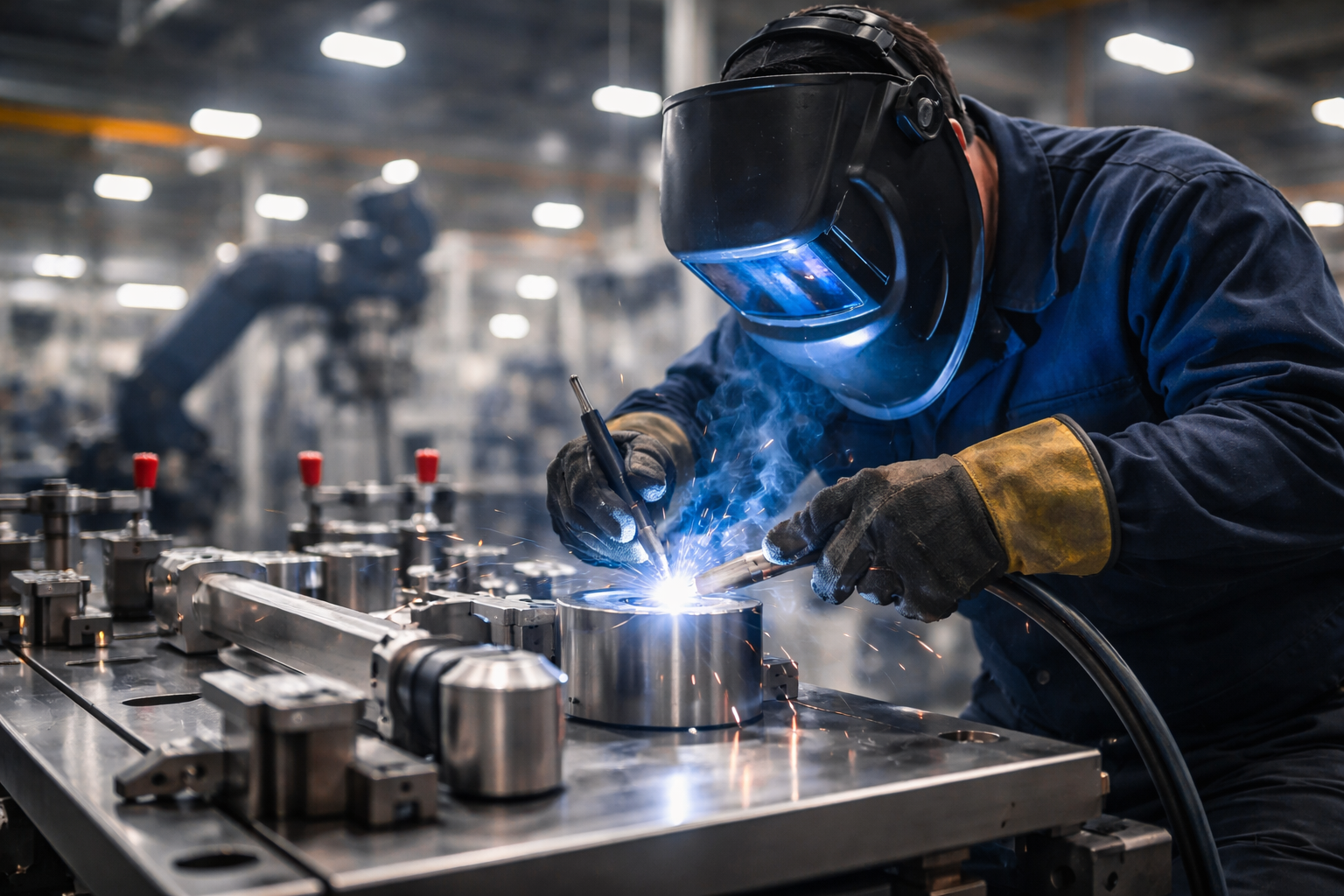
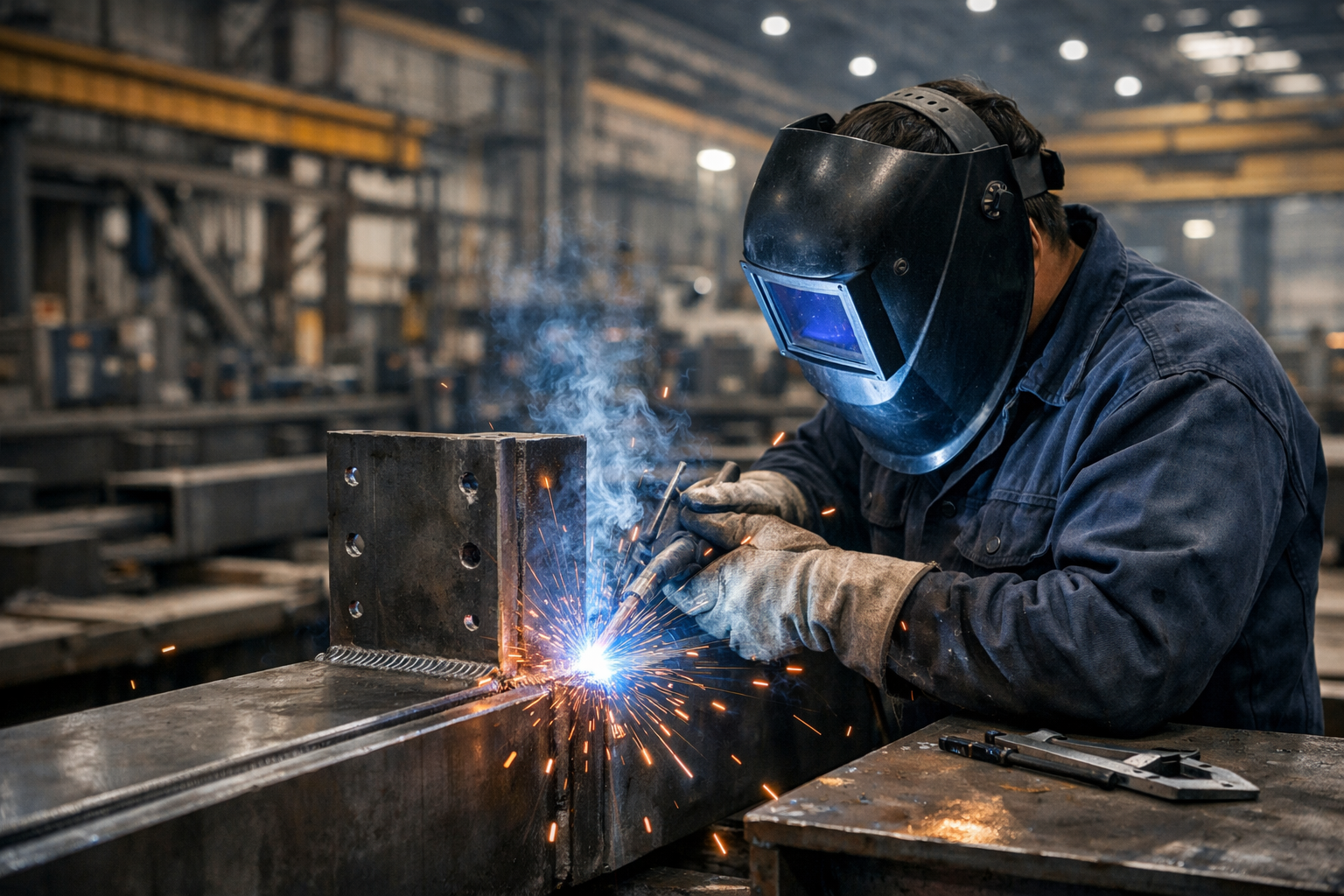
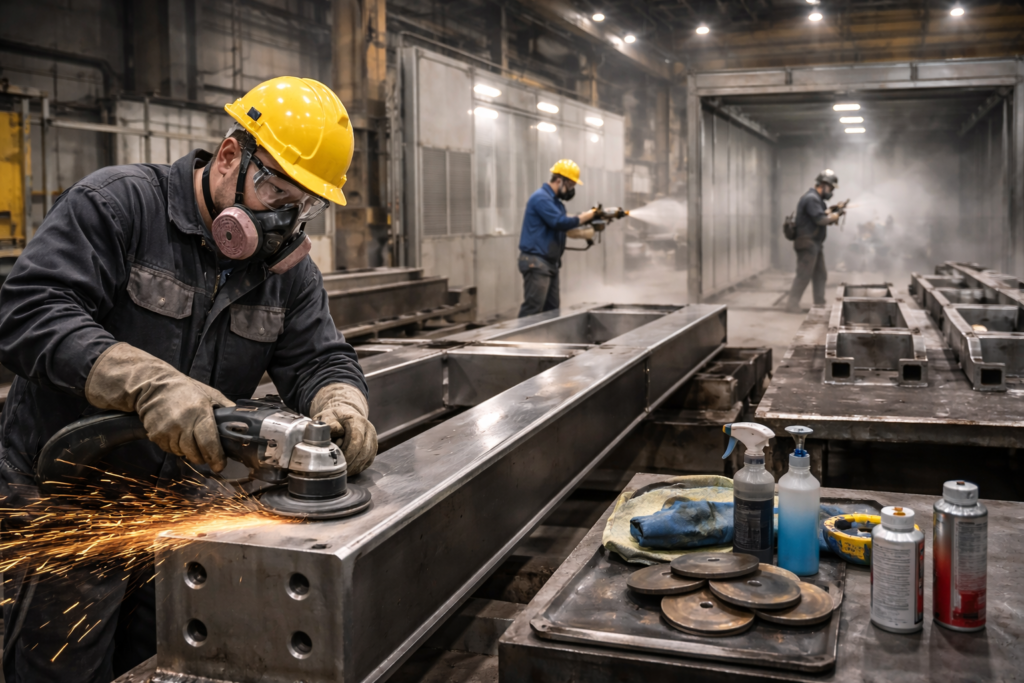
Fabrication involves shaping and assembling metal components according to design specifications. This may include cutting, bending, machining, and welding using advanced tools and skilled technicians.
At this point, the project moves through multiple metal fabrication stages, each contributing to the final form and function of the product. These stages are carefully sequenced to maintain accuracy and prevent distortion or misalignment.
Common fabrication activities include:
- CNC cutting and machining
- Press braking and forming
- Welding and joining
- Drilling and finishing operations
Each operation must be performed with precision to ensure components fit together correctly during assembly.
Step Four: Assembly and Integration
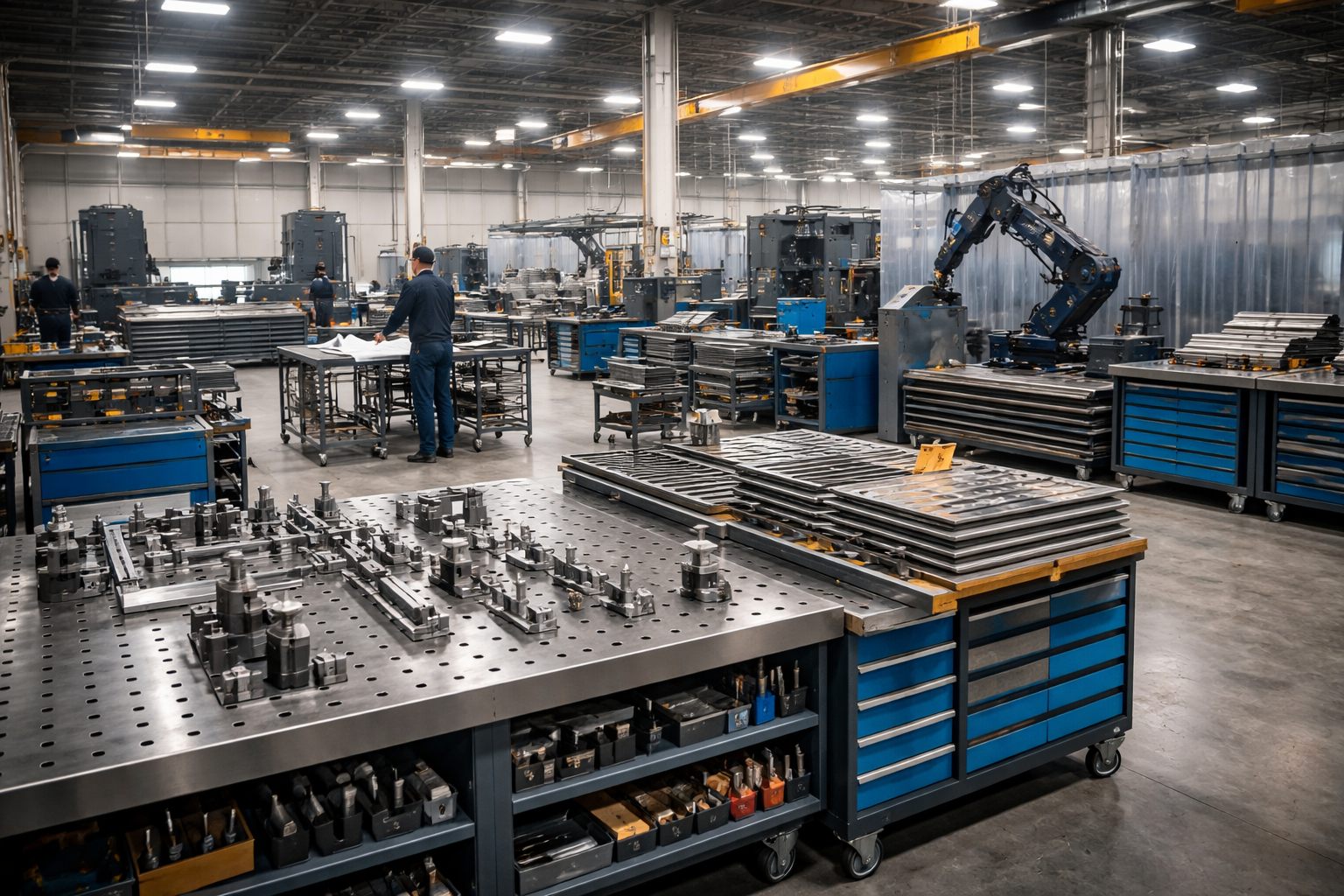
After individual components are fabricated, they are assembled into complete units or subassemblies. This step ensures that all parts align correctly and function as intended.
Assembly often reveals how effectively earlier stages were executed. Accurate fabrication simplifies this phase, reducing the need for adjustments or rework. Efficient assembly supports faster turnaround times and smoother project progression.
A clearly defined industrial fabrication workflow ensures that materials, components, and information move seamlessly between stations, minimizing bottlenecks and downtime.
Step Five: Quality Control and Inspection
Quality is not an afterthought—it is built into every phase of industrial fabrication. Inspection and testing verify that components meet design specifications, safety standards, and performance criteria.
Quality control in metal fabrication includes dimensional checks, weld inspections, surface evaluations, and functional testing. These measures ensure consistency, reliability, and compliance before products move to the next stage or are approved for delivery.
Effective quality control provides several benefits:
- Early detection of defects
- Reduced risk of failure in service
- Improved customer confidence
- Lower long-term maintenance costs
By enforcing rigorous inspection protocols, fabricators protect both their reputation and their clients’ operations.
Step Six: Finishing and Surface Treatment
Finishing processes enhance durability, appearance, and resistance to environmental factors. Depending on the application, components may undergo coating, painting, galvanizing, or other surface treatments.
These treatments:
- Protect against corrosion and wear
- Improve aesthetic consistency
- Enhance performance in harsh environments
- Extend product lifespan
Finishing ensures that fabricated components are not only functional but also ready for long-term industrial use.
Step Seven: Packaging, Logistics, and Delivery
The final phase focuses on preparing components for transport and installation. Proper packaging prevents damage during shipping, while careful logistics planning ensures timely delivery to the project site.
This stage completes the journey of end to end metal manufacturing, where coordination between fabrication, quality assurance, and logistics ensures a seamless transition from the shop floor to operational deployment.
Reliable delivery supports project schedules and allows clients to proceed confidently with installation and commissioning.
Why Process Transparency Matters
Clear visibility into the fabrication process helps clients make informed decisions, anticipate timelines, and manage expectations. Transparency builds trust and allows for better collaboration between fabricators, engineers, and end users.
When each step is clearly defined and communicated, projects run more smoothly, issues are resolved faster, and outcomes improve across the board.
Conclusion
The industrial metal fabrication process is a carefully orchestrated journey that transforms ideas into dependable, high-performance products. From design and engineering to assembly, inspection, and delivery, each phase plays a critical role in ensuring quality, efficiency, and reliability. By understanding and optimizing this process, industrial organizations can reduce risk, improve outcomes, and build lasting value into every project they undertake.